Pipe Welding Tips Every Welder Should Know
Weld Porosity | Causes leaks, rust, and big failures. |
High-Quality Welds | Needed to handle high pressure and tough conditions. |
Regular Inspections | Needed to keep welded joints strong. |
If a weld fails on a big gas pipe, it can explode. This can hurt the environment and stop production. You might get fined and lose trust. Simple tips help you avoid these problems and keep your work safe.
Key Takeaways
- Make your workspace safe. Remove things that can catch fire. Make sure air moves well in the room. This stops accidents and keeps you safe when welding.
- Clean the pipes before you start welding. Dirt and oil can make welds weak. Weak welds can cause leaks and breaks.
- Wear the right personal protective equipment (PPE). PPE keeps you safe from sparks and bad fumes. Good gear lowers your chance of getting hurt.
- Get the joints ready with care. Use tack welds to hold pipes still. This makes strong connections and stops pipes from bending when you finish welding.
- Check and take care of your welding equipment often. Good care keeps your tools working well. This helps you make strong welds.
Pipe Welding Preparation
Work Area Setup
You need a safe and organized workspace before you start pipe welding. Remove all flammable materials from the area. Keep a fire extinguisher close by. Good ventilation is important because welding fumes can be harmful. Make sure you have enough airflow to keep the air clean. Check your equipment for leaks or faults. Set up screens to protect others from sparks and UV light. Always know where emergency exits are and review emergency procedures with your team.
OSHA and ANSI Z49.1-2021 set rules for welding safety. These rules require proper ventilation, protective clothing, and electrical safety. Following these standards helps protect you and your equipment from accidents.
PPE
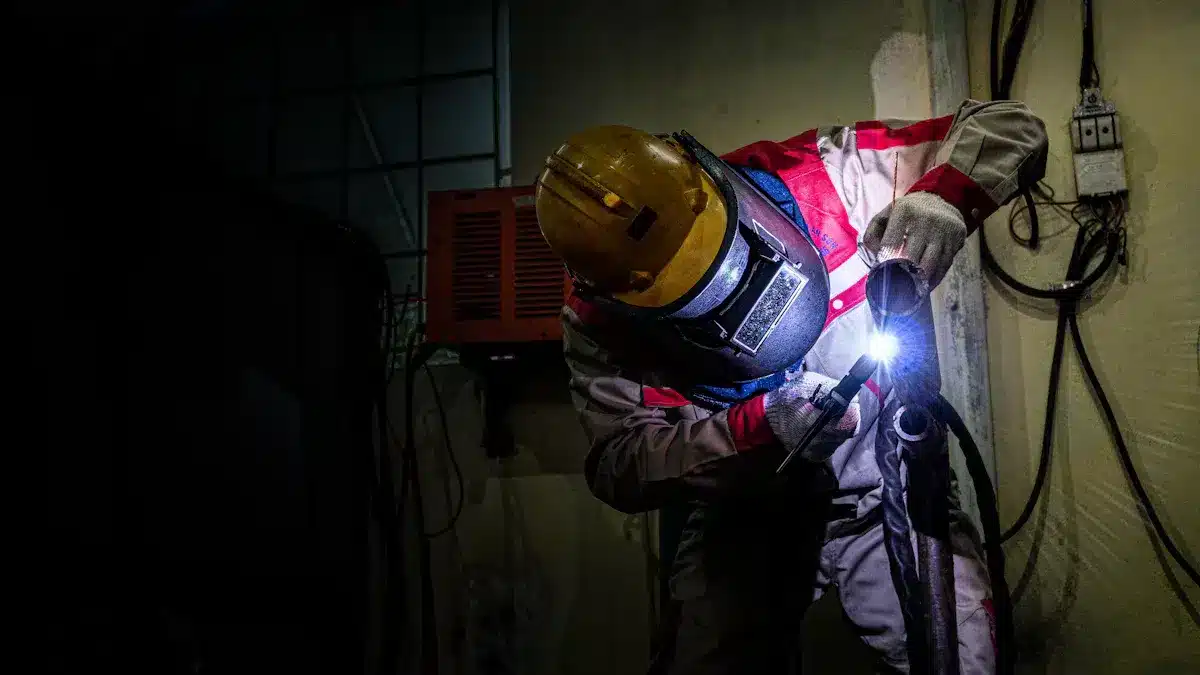
Personal protective equipment keeps you safe during pipe welding. Wear flame-resistant clothing to protect your skin from sparks and hot metal. Choose the right gloves for your welding process. Thick leather gloves work well for stick welding, while thinner gloves give you more control for TIG welding. Always use a helmet or hand shield with the correct filter shade to protect your eyes from bright light and flying debris.
| Type of PPE | Description |
|---|---|
| Flame-resistant clothing | Shields you from sparks, UV rays, and hot metal. Jackets, pants, and boots are essential. |
| Welding gloves | Protect your hands. Pick the type that matches your welding process. |
| Respiratory protection | Guards you from harmful fumes. Use a respirator if needed. |
| Eye protection | Prevents injuries from light and debris. Helmets and shields are a must. |
Wearing the right PPE lowers your risk of burns, eye injuries, and breathing problems.
Pipe Cleaning
Clean pipes are key to strong welds. Dirt, oil, and oxides on the pipe can cause weld defects. Oxides from cutting can make the metal harder to melt, which may lead to burn-through. If you do not clean the pipe, you risk porosity, lack of fusion, and inclusions in your weld. Poor cleaning can also cause slag to get trapped, making the weld weak. Always clean the edge of the weld surface before you start. This step helps you avoid common problems and keeps your welds strong in oil, gas, and water treatment systems.
Welding Techniques
Joint Prep
You need to prepare every joint carefully before you start welding. A clean surface helps you make strong joints. Dirt, oil, or rust can cause weak spots and porosity. Most pipe welding jobs use butt joints because they create a seamless connection. You should bevel the edges of the pipe to form a V-groove or single bevel. This shape lets the weld metal fuse deeply with the base metal. Good joint prep helps you avoid problems like poor penetration, lack of fusion, and inclusions. These issues can make the weld weak and unsafe.
- Clean the pipe ends to remove all contaminants.
- Use the right bevel angle for the pipe thickness.
- Check the fit-up to make sure the joint is tight and even.
- Choose the right joint design for the job, such as a butt joint with or without backing.
If you skip these steps, you risk weld failures. Always take time to prepare the joint. This step sets the stage for a strong and lasting weld.
Tack Welds
Tack welds hold the pipe in place before you make the final weld. They keep the joint from moving or warping. You need to space tack welds evenly around the pipe. This helps prevent distortion and keeps the gap uniform. The table below shows common tack welding sequences:
| Tack Welding Sequence | Description |
|---|---|
| Straight through | Tack weld straight through to the end of the joint, clamping plates to maintain joint gap. |
| Back stepping | Tack weld one end and use a back stepping technique for the rest of the joint. |
| Center tack | Tack weld the center and complete by back stepping. |
Use small, strong tack welds. Too large, and they can cause stress or cracks. Too small, and they may break during welding. Always remove any tack welds that show defects before you continue.
Heat Control
You must control heat input during pipe welding. Too much heat can warp the pipe or cause cracks. Too little heat can lead to poor fusion. Managing heat helps you avoid hard, brittle areas that may crack later. You can control heat by adjusting your welding speed, amperage, and voltage. Techniques like stitch welding and backstep welding also help spread heat more evenly.
- Control the cooling rate to prevent brittle microstructures.
- Use fixturing to hold the pipe steady and reduce movement.
- Adjust your work angle to direct heat where you need it.
Proper heat control keeps the weld strong and reduces the risk of warping. It also helps you make a smooth, even weld bead.
Tip: Always watch for signs of overheating, like discoloration or warping. Adjust your settings if you see these signs.
Multi-Pass Welds
Many pipe welding jobs need more than one pass to fill the joint. Each pass adds metal and builds up the weld. You must manage the heat-affected zone (HAZ) with each pass. Too much heat can make the HAZ large and weak. You can use several best practices to keep the HAZ small and strong:
- Use low heat input welding processes, such as TIG, for less heat.
- Adjust your welding parameters, like amperage and speed, to control heat.
- Preheat the base metal to help it expand evenly.
- Use post-weld heat treatment to relieve stress.
- Pick the right filler material for the pipe.
- Control the cooling rate after each pass.
- Try narrow groove welds to use less heat.
You can choose from several welding processes for pipe welding. Each has its strengths:
| Welding Process | Material Suitability | Thickness | Weld Quality | Welding Position | Environmental Conditions |
|---|---|---|---|---|---|
| GTAW (TIG) | Thin materials, stainless steel, aluminum, reactive metals | < 1/8 inch | High-quality, minimal distortion | All positions | Sensitive to wind |
| GMAW (MIG) | Carbon steel, mild steel, aluminum | Wide range | High-quality, good deposition rates | Flat or horizontal | Moderately sensitive to wind |
| SMAW (Stick) | Carbon steel, low-alloy steel, stainless steel | Various thicknesses | Satisfactory in various environments | All positions, challenging in vertical or overhead | N/A |
| FCAW | Carbon steel, low-alloy steel, stainless steel | Effective for thicker materials | High deposition rates, deeper penetration | All positions | N/A |
Automated orbital GTAW is also used for high-quality, repeatable welds, especially on stainless steel pipes.
You need to adjust your work angle and body position as you weld around the pipe. Good positioning helps you control the weld pool and keep the bead even. If you hold the torch or electrode at the wrong angle, you may get incomplete fusion or uneven welds. Move your body smoothly and keep your arms steady. This helps you make consistent, high-quality welds every time.
Note: Practice your body movements before you start welding. This helps you avoid strain and keeps your welds looking professional.
Pipe Welding Mistakes
Mistakes in pipe welding can lead to weak joints, leaks, or even dangerous failures. You can avoid most problems by understanding the most common errors and learning how to fix them.
Fit-Up Issues
Fit-up problems happen when the pipes do not line up correctly before welding. You need to make sure the pipes are straight and the gaps are even. If you skip this step, you risk weld defects and costly repairs later.
- Accurate pipe alignment is critical in pipeline construction.
- Poor fit-up can lead to defects and expensive rework.
- Use internal hydraulic or pneumatic line-up clamps for precise alignment.
- Always cut, bevel, and fit metal pieces with care.
- Use clamps or fixtures to hold parts steady during welding.
The American Welding Society says poor fit-up causes almost 30% of weld failures in big projects. Misalignment and gaps create stress points and weak welds. You can prevent these problems by checking alignment and using the right tools.
If you do not fix fit-up issues, you may see lack of fusion, incomplete penetration, or cracks. These problems can make the whole pipe system unsafe.
Penetration Problems
Penetration problems mean the weld does not go deep enough into the joint. This makes the weld weak and easy to break. You need to watch for these causes:
- Inconsistent travel speed changes how deep the weld goes. Keep your speed steady and use visual guides.
- Wrong torch angle or position can stop the weld from fusing well. Hold the torch at 10 to 15 degrees off vertical.
- Using the wrong electrode or filler metal limits penetration. Pick the right filler for your joint.
- Incorrect shielding gas affects arc stability. Always check the gas type and flow rate.
- Poor joint fit-up or thick root face can block penetration. Measure and grind if needed.
- Imprecise heat input can cause shallow welds. Monitor and adjust your settings.
If you do not solve penetration problems, you risk weld discontinuities and incomplete fusion. These issues can make the pipe fail under pressure.
Overheating
Overheating happens when you use too much heat during welding. This mistake can change the metal inside the pipe and make the weld brittle. When the metal grains get too big, the weld loses strength, toughness, and ductility. Brittle welds can crack or break when the pipe is in use.
Overheating can also cause microcracks and a big loss of ductility. You need to control your heat input and let the weld cool at the right rate. Watch for signs like discoloration or warping. Adjust your settings if you see these problems.
If you keep overheating the weld, you may see failures when the pipe is under stress. Always use the right settings for your material and thickness.
Shielding Gas Errors
Shielding gas protects the weld from air and keeps the arc stable. If you use the wrong gas or set the flow rate too high or low, you can get weld defects. Problems like porosity, weak welds, and poor bead appearance often come from shielding gas mistakes.
| Common Shielding Gas Errors | How to Prevent Them |
|---|---|
| Wrong gas type | Check the welding process and metal |
| Incorrect flow rate | Set flow to manufacturer specs |
| Leaks in hoses | Inspect and replace damaged hoses |
| Drafts or wind | Use screens to block air movement |
You need to check your gas setup before you start welding. Make sure the hoses are tight and the gas is flowing at the right rate. If you see bubbles, holes, or a rough weld surface, stop and fix your shielding gas.
Tip: Always use the shielding gas recommended for your welding process and pipe material. This helps you get strong, clean welds every time.
Equipment & Materials

Welding Process Choice
You have to choose the right welding process for each job. The pipe’s type, thickness, and size are important. If you pick the wrong process, the weld might not be strong. Use the table below to help you make a good choice:
| Criteria | Description |
|---|---|
| Maximum Thickness | You can weld up to 2T. T is the thickness of your test coupon’s weld metal. |
| Minimum Thickness | Most jobs do not have a set minimum thickness. |
| Unlimited Thickness | If you add 13 mm or more with three layers, you can weld any thickness. |
| Outside Diameter Qualification | For pipes under 25 mm, you can weld any size. For 25–73 mm, the smallest is 25 mm. Over 73 mm, the smallest is 73 mm, and there is no biggest size. |
Tip: Always check the pipe’s size and thickness before you start. This helps you pick the best welding process and avoid mistakes.
Electrodes & Filler
The electrode and filler you use change how strong your weld will be. You need to match them to the job you are doing. Here are some important things to remember:
- The right electrode makes strong welds and less mess.
- The electrode’s coating protects the weld and keeps the arc steady.
- Pick an electrode that matches what you need, like strength or stopping rust.
- Filler metals with reverse polarity make deep welds. Straight polarity makes shallow welds.
- Carbon in the filler makes the weld hard and strong but not easy to bend.
- Nickel makes the weld strong and tough but harder to cut or shape.
- The electrode’s coating also changes how easy it is to use and how good the weld looks.
Note: Always check the electrode and filler details before you start. This helps you get the right weld for your project.
Equipment Care
You need to take care of your welding equipment to get good results. Checking and cleaning your tools often keeps them safe and working well. Use this table to help you remember what to do:
| Maintenance Practice | Description |
|---|---|
| Clean Cooling Fins | Use air or a soft brush to keep fins clean and stop overheating. |
| Check Coolant Levels | Make sure water-cooled systems have enough coolant. |
| Inspect Hoses and Connections | Look for leaks or damage. Tighten or replace if needed. |
| Test Fans | Make sure fans work so your machine does not get too hot. |
| Monitor Temperature Gauges | Check gauges often to keep equipment safe. |
| Visual Inspection of Cables | Look for damage, especially near the ends. |
| Flexibility Check | Bend cables gently. If they feel stiff, they might be damaged inside. |
| Connector Examination | Check for wear or rust to keep connections tight. |
| Check for Heat Damage | Watch for color changes or melted cable covers. |
| Measure Resistance | Use a multimeter to check for hidden cable damage. |
| Calibration and Alignment | Calibrate your equipment often to keep it working right. |
Regular care helps you stop breakdowns and keeps your welds strong and safe.
Quality & Inspection
Pipe Alignment
You must check pipe alignment before welding. Good alignment makes welds strong and long-lasting. If pipes are not lined up right, the structure can lose 30% of its strength. Bad alignment puts more stress on the weld. This can make it break sooner. ASME B31.3 and ASTM have rules for pipe alignment. The table below explains why alignment is important:
| Evidence Type | Description |
|---|---|
| Industry Standards | ASME B31.3 and ASTM give rules for pipe alignment before welding. |
| Impact of Misalignment | Bad alignment can make the structure 30% weaker. |
| Consequences of Poor Alignment | Bad welds do not last long and put more stress on the structure. |
Tip: Always use alignment tools and double-check before welding. This helps you avoid expensive errors.
Difficult Positions
Pipe welding is often done in hard places to reach. Sometimes you must weld above your head or up and down. These jobs need special skills and tools. Mechanized welding lets you stay away from hot metal and keeps you safer. Orbital welding goes all the way around the pipe. This lowers the chance of dirt getting in the weld. You get better welds if you keep the same speed and distance.
- Stick (SMAW) and TIG welding work in any position.
- Submerged arc welding (SAW) only works flat or sideways.
- The 5G position means the pipe does not move. You must change how you weld as you go around.
- The 6G position is even harder. You need to weld in many directions and have advanced skills.
Practice welding in different positions to get better and more confident.
Weld Testing
You must test your welds to make sure they are safe and strong. Different tests find different problems in the weld. The table below shows common tests and what they find:
| Testing Method | Defects Detected |
|---|---|
| Ultrasonic Testing (UT) | Finds cracks, empty spots, and places that did not fuse. |
| Visual Inspection (Including RVI) | Finds surface cracks, holes, and bad alignment. |
| Magnetic Particle Inspection (MPI) | Finds cracks on or near the surface. |
| Liquid Penetrant Testing (LPT) | Finds cracks that break the surface. |
| Radiographic Testing (RT) | Finds inside problems like holes or places not welded. |

Many welds do not pass inspection because of common mistakes. These include holes, undercut, not enough weld, not enough fusion, and arc marks. You can stop these problems by following good steps and checking your work often.
Remember: Careful checking and testing help you make safe and high-quality pipe welds every time.
You can make welds safer and stronger by using good habits. Using the right steps helps stop leaks and fixes. You keep everyone safe and finish jobs on time with smart welding. TDCO helps you learn with training, job tips, and apprenticeships. Keep learning by going to workshops, reading welding magazines, and using free tools.
| Strategy | Description |
|---|---|
| Weld Joint Design | Make joint designs better for stronger welds. |
| Process Practice Improvements | Check and get better at your welding steps. |
Always be curious and try to get better at welding every day.
FAQ
You should always clean the pipe before welding. Remove oil, rust, and dirt. Use the right shielding gas and check for leaks. Good cleaning and gas flow stop air from getting trapped in the weld.
Check the pipe material and thickness. Use TIG for thin or stainless pipes. Stick welding works well outdoors or on thick pipes. MIG is fast for mild steel. Match the process to your job needs.
Proper alignment keeps the weld strong. Misaligned pipes create weak spots and stress. You can use alignment tools to check your setup. Good alignment helps your weld last longer and stay safe.
You need flame-resistant clothing, welding gloves, a helmet with the right shade, and safety boots. For extra safety, use a respirator if fumes are strong. Always check your gear before you start.